
2026 Budget and increases in UK wine duty
Posted by Gavin Quinney on 30th Oct 2026
It’s a rare thing for a Chancellor of the Exchequer to mention the increase in UK wine duty in a Budget speech, and this week was no different.
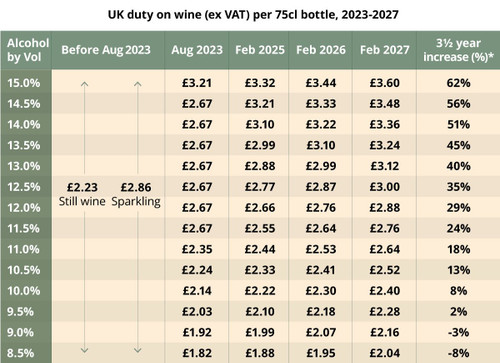
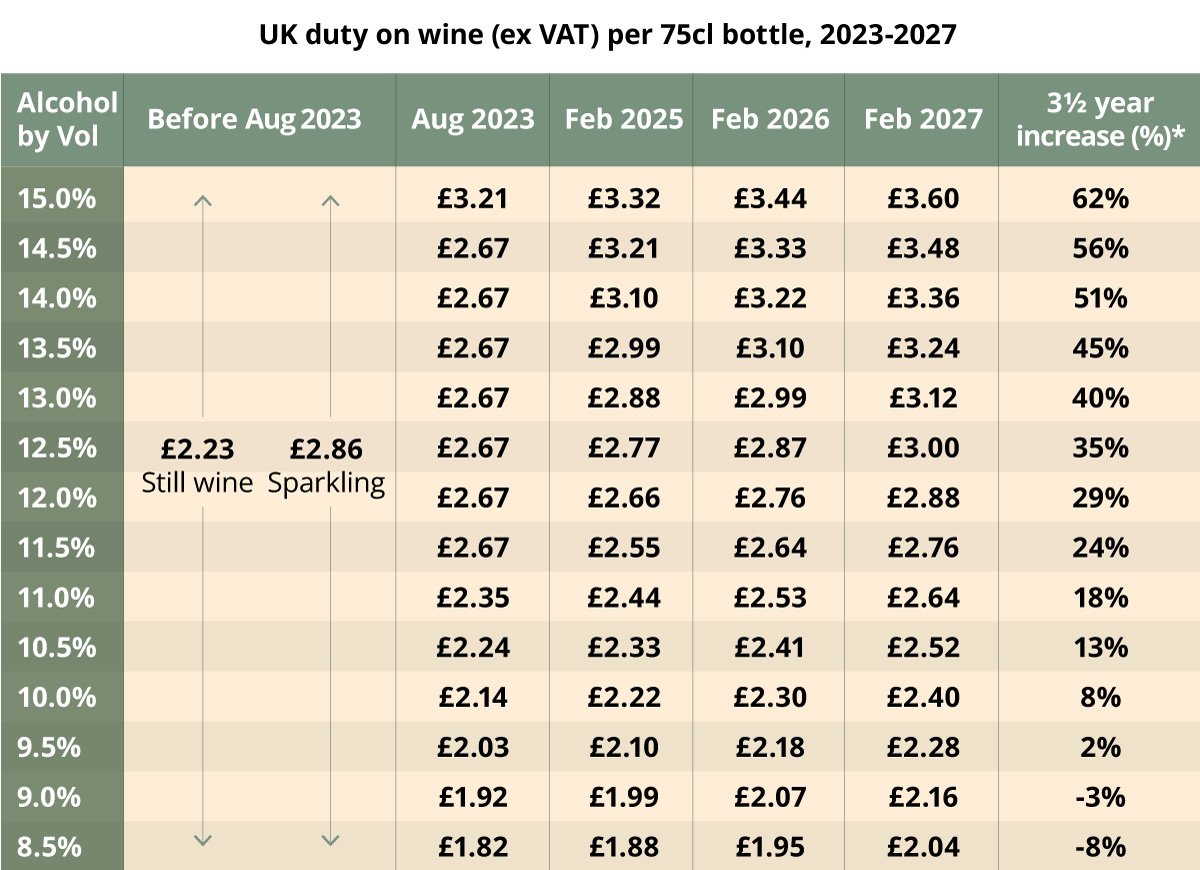
Only a few in the media have picked up on the ‘alcohol duty uprating’ in the small print. The UK duty on a bottle of wine will go up by between 9p and 16p a bottle plus VAT (ie 11p to 19p inc) from 1 February 2027, depending on the level of alcohol on the label. For example, duty will be exactly £3 plus VAT for a bottle at 12.5% abv (‘alcohol by volume’) and £3.48 plus VAT for a bottle at 14.5%. It will cost 12p – either more or less – for every increment of 0.5% abv.
There is some good news, however. The exchange rate for sterling against the euro is favourable for Brits for once, so there’ll be a valid push to sell wine in the run-up to Christmas.
If you have any questions or comments do email Gavin, Angela and Georgie by clicking this link, or reply to this email and Georgie will get back to you. We’re always happy to hear from you.
All the best
Gavin & Angela Quinney
A dramatic rise in duty since 2023
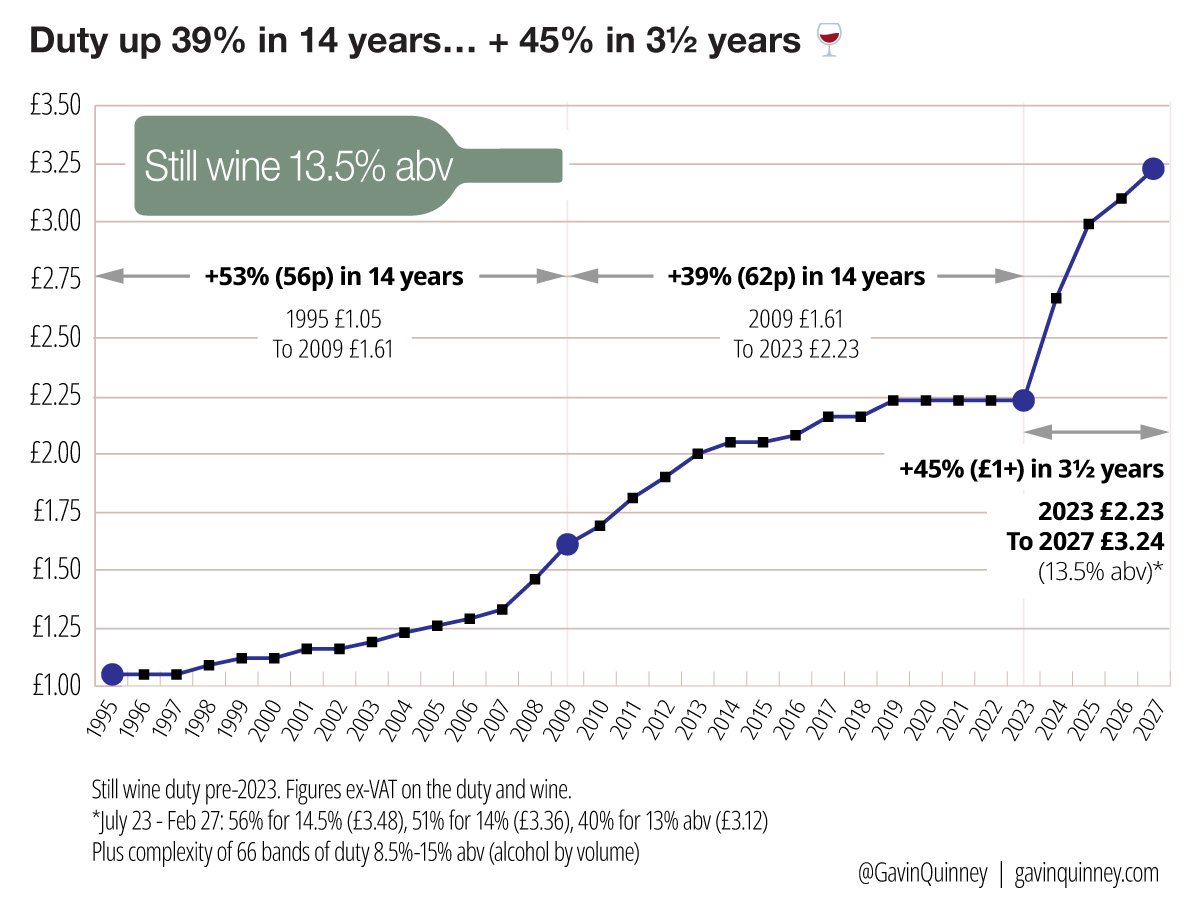
A bottle with 13.5% abv will see duty go up by more than a pound, or 45%, since July 2023. Duty on the 14.5% wine will have gone up 56% over the three and a half years.
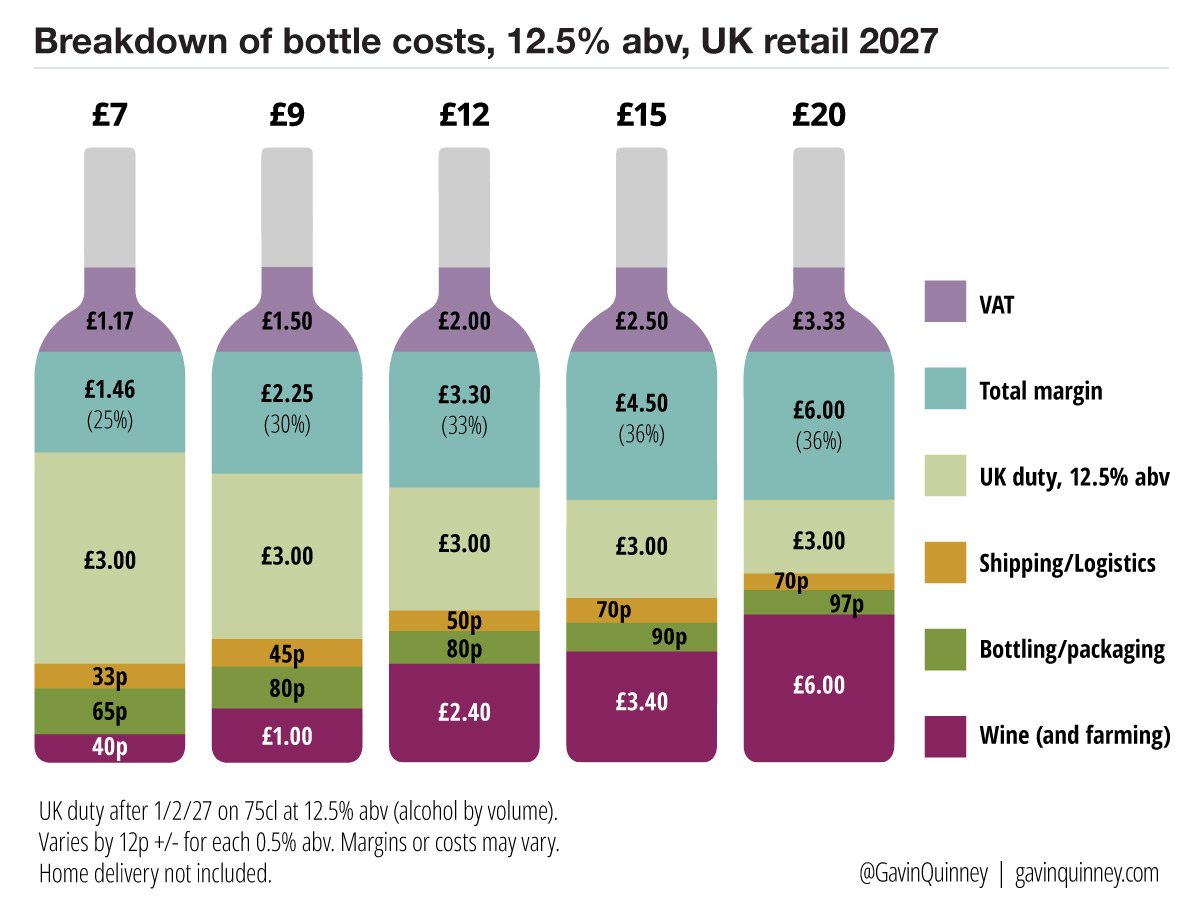
Of course, as it’s a fixed price for the UK duty based on the level of alcohol, if you trade up you’ll get more bang for your buck. That’s with all things being equal, which can be hard to fathom as there are so many ‘special’ offers.
If you’re wondering how wine can be so inexpensive, one example would be the largest supplier to supermarkets, Australia. The UK is by far their biggest market by volume and over 90% of wine for the UK is sensibly shipped in bulk in container and bottled there.
In the Wine Australia Export Report for the 12 months to the end of June 2026, the average global value per litre of unpackaged wine when it leaves Australia is quoted at 1.13 Aud (‘free on board’/pre-shipment). That equates to just 43p for 75cl during that period.
It’s not easy for the Aussies either, mind, as their exports to the UK fell to their lowest level in 25 years. The competition in that space is fierce.
‘The race to the bottom’
One problem with taxing wine with duty of £3 or so per bottle plus VAT is that the people who can least afford it are penalised the most. £3 tax on a £50 bottle is negligible. On £6-£8 it’s huge.
The Wine and Spirit Trade Association (WSTA), of which we are members in the UK, published their market report in September. ‘There were around 1 billion still wine 75cl bottles sold in the supermarkets, discounters, specialist retailers and convenience stores over the last 12 months up to 13th June 2026. The average 75cl bottle price moved to £6.94 (+3%).’
The average of £6.94 a bottle includes £1.16 of VAT, and if the duty per bottle averaged £2.78 (split between 12.5% abv in 2025 and 12% in 2026) that would leave just £3 for the retailers’ margin and all the costs of the wine, including the bottling, shipping and logistics.
‘The race to the bottom is accelerating, care of the recent daft duty increases linked to alcohol content, meaning the UK now pays the highest wine taxes in Europe. Attempting to offset this, lots of popular 13 per cent-plus drops have been reblended down to 10.5 and 11 per cent alcohol. Yet, as one buyer told me, focusing on alcohol levels instead of taste “means a dilution of the sense of place”, and in my book that often means a dip in quality.’
Jane MacQuitty, The Times, 6 March 2026.
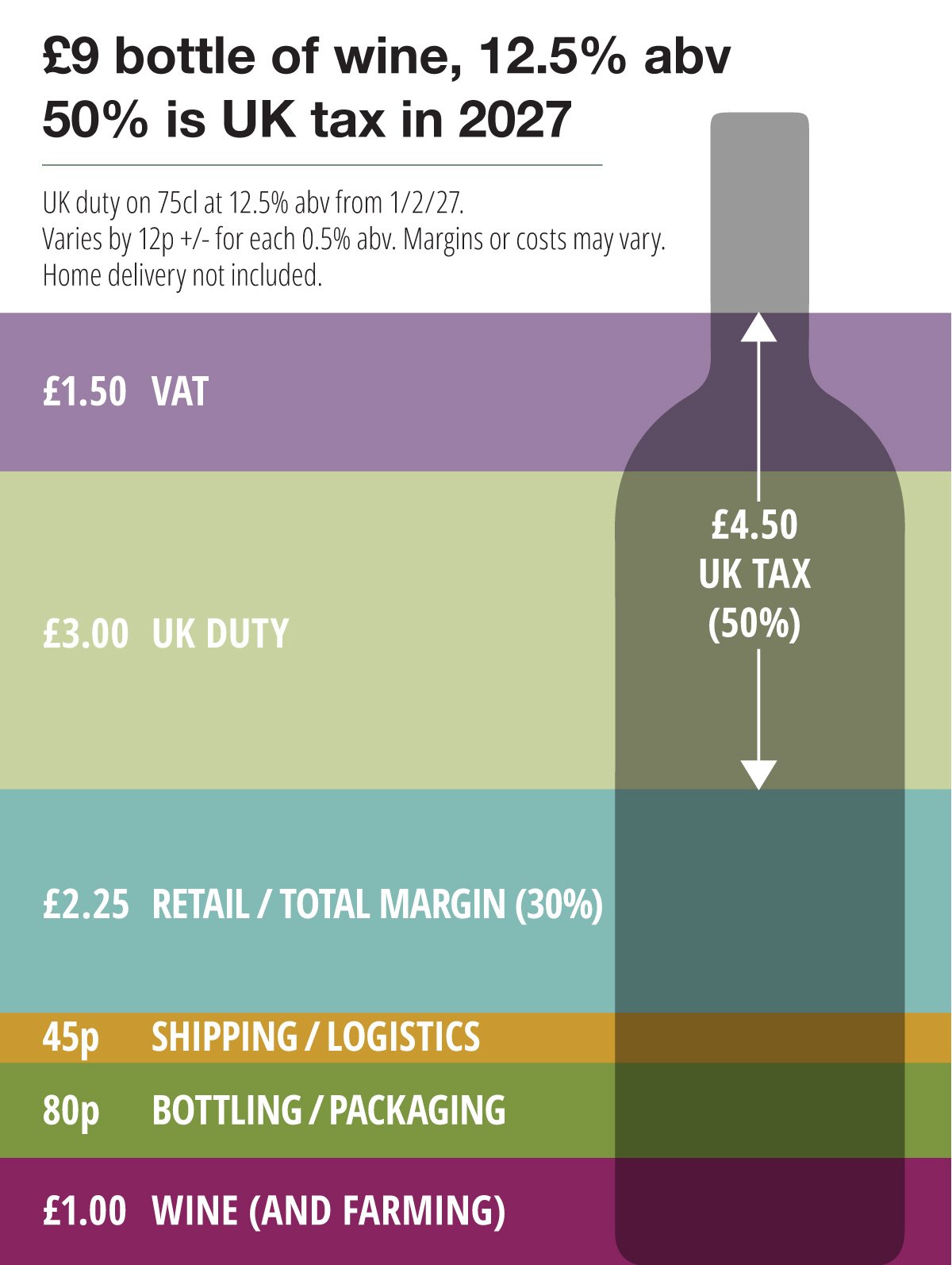
A £9 bottle at 12.5% abv will see 50% UK tax, made up of £1.50 VAT and £3 duty. With the remaining £4.50, it would be fair to say that around £1 would be spent on the liquid itself – and the farming.
What it means for restaurant wine lists
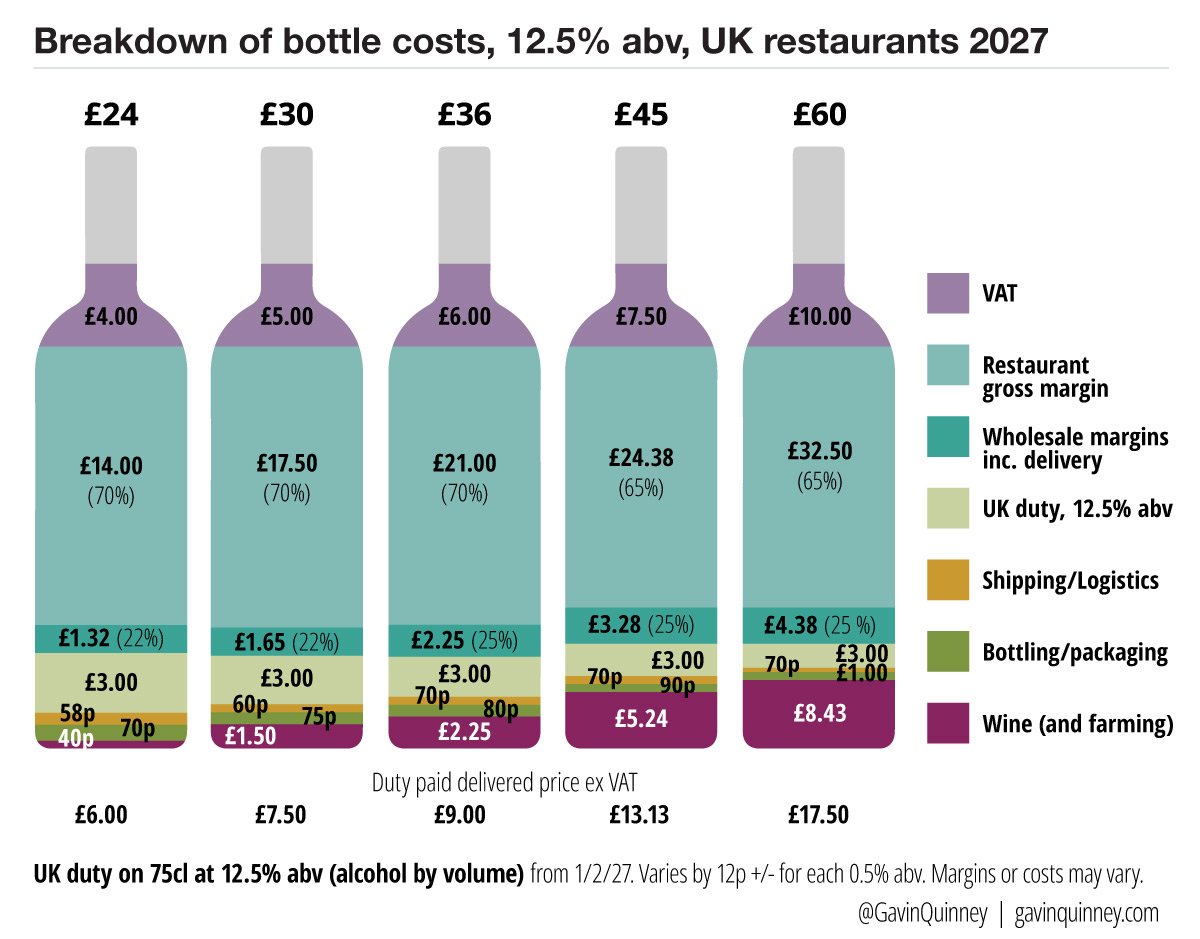
For the on-trade, duty is the major cost for the less expensive end of the wine list. For a wine listed at £30, I would expect the wholesale, duty-paid price of the wine, delivered to the restaurant, to be around £7.50 excluding VAT – max. That’s because most restaurants need to make a margin of around 70%, and for that a consumer could divide the list price by 4 for an idea of the ex-VAT cost price.
This allows for £30 to have £5 of VAT included and £17.50 gross margin, leaving £7.50. For a wine at 12.5% abv in 2027 (or 13% in 2026), UK duty would be £3, leaving £4.50 for the wholesaler, all the costs and the bottle of wine itself. The liquid inside really can’t cost much at all at source.
How the UK compares with Europe
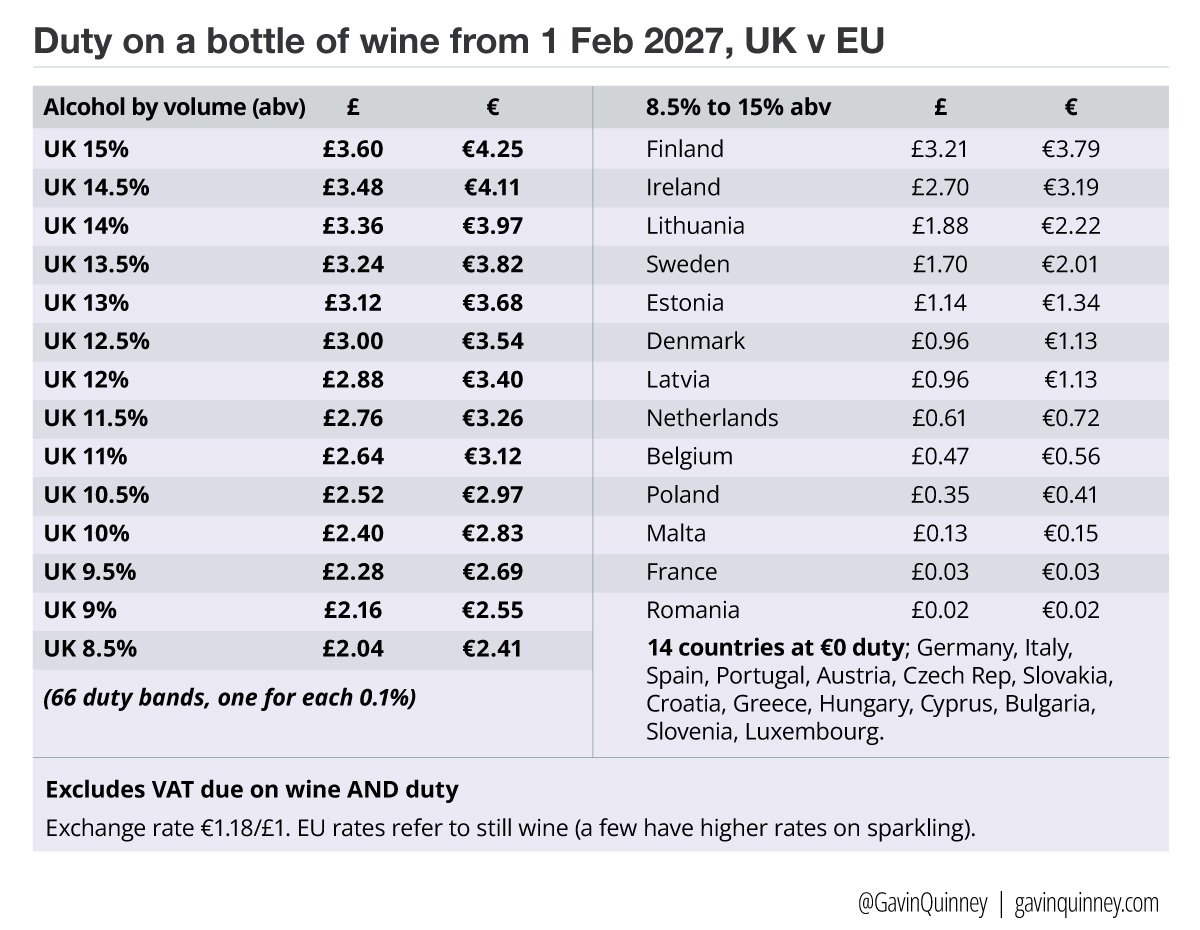
As Jane MacQuitty, above, mentioned ‘the highest wine taxes in Europe‘, I thought I’d update this table to take into account next February’s increase in the UK. Wine lovers in Britain are being striped up, I’m afraid. For any wine of 13.5% abv or more, the UK has the highest rate. Understandably, at the other end, many wine producing countries only charge VAT and have no duty, but neighbours like the Netherlands and Belgium levy much lower duty than the UK.
A simpler system? If only
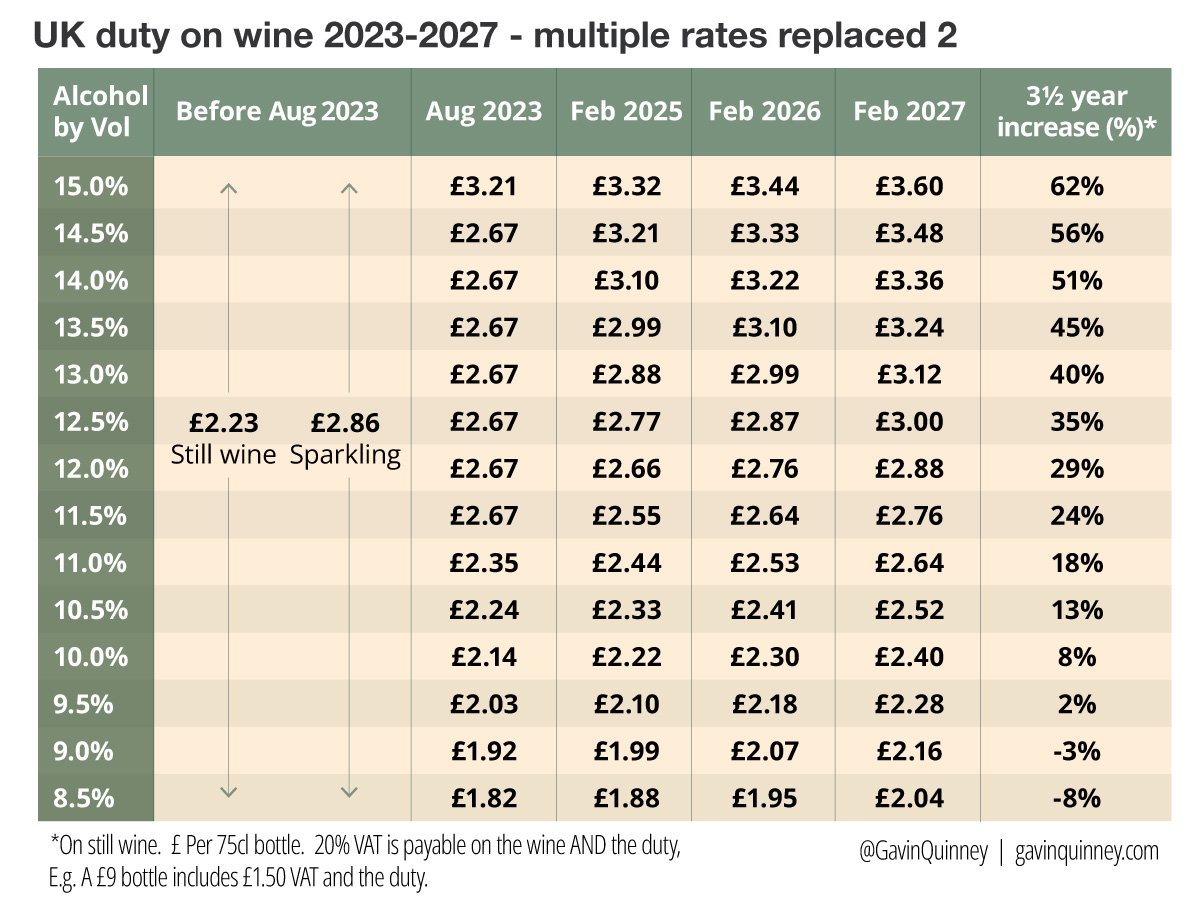
Added to which, it’s now all so complicated. Multiple rates replaced just two – or three if you include fortified wine like port and sherry. Here’s a reminder of Rishi Sunak’s Budget speech back in October 2021: “We are taking advantage of leaving the EU to announce the most radical simplification of alcohol duties for over 140 years.”
As a reminder, when Sunak’s new system was introduced in August 2023, there was a temporary stay of execution on wines between 11.5% and 14.5% abv (about 85% of wine sold): a fixed rate of £2.67 per bottle ran from 1/8/23 to 1/2/25. This 20% duty increase on most still wines – from £2.23 to £2.67 (up 54p a bottle with VAT) – was the largest in 50 years.
The so-called ‘easement’ then left a new Government to be lumped with rolling it out. Unfortunately, Labour opted to do just that, and a stash of red tape fell on wine merchants, importers, agents, bonded warehouses and customs agents (which we’ve only needed since Brexit), plus higher duty rates today for all still wines over 10% abv.
Wine duty this century: the long view
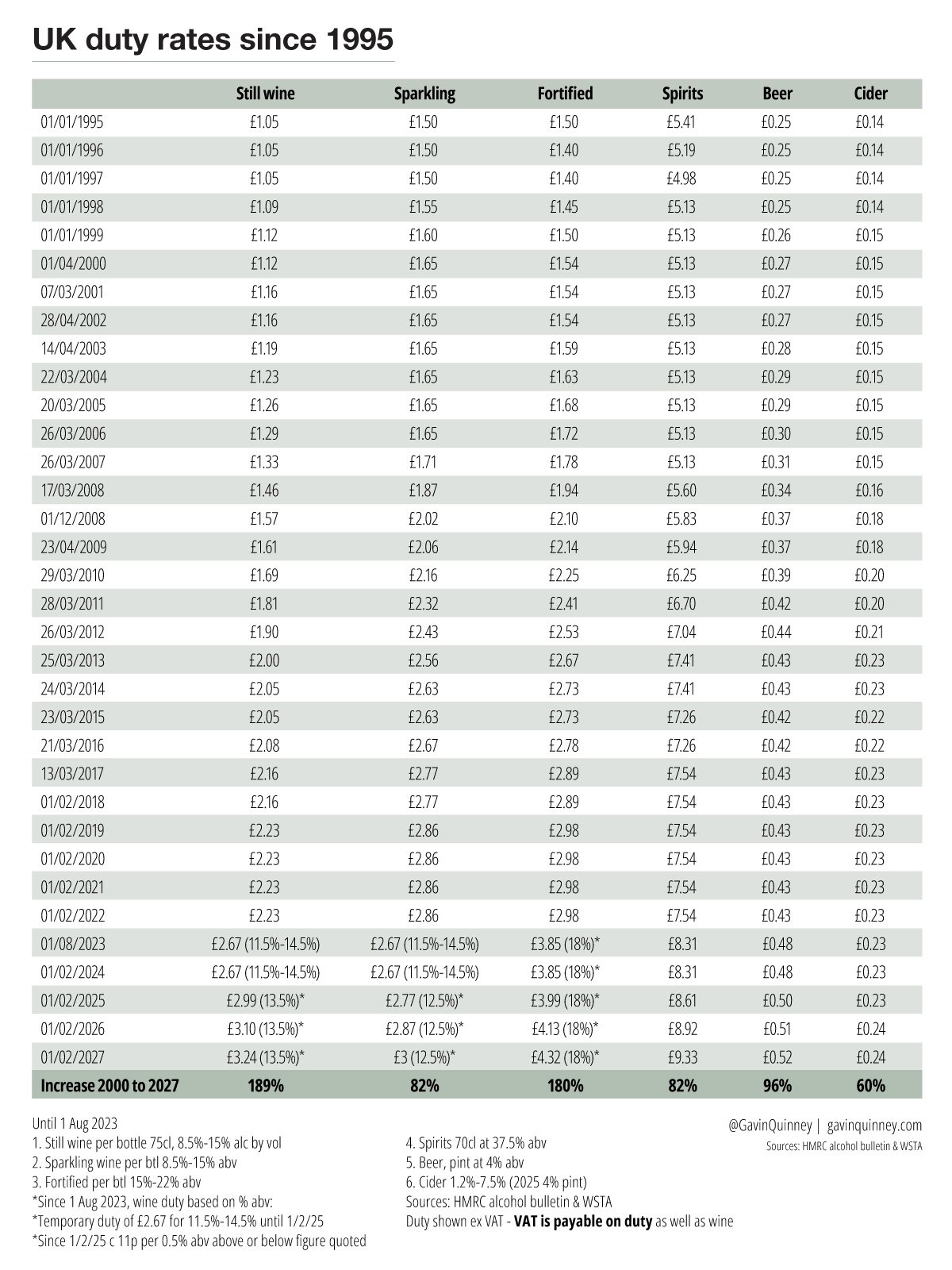
This is a long table, of course, but look at the last line. The increases in duty this century will continue to hit still wine and fortified wines the hardest – up 189% and 180%, respectively, and more so for those with higher alcohol.
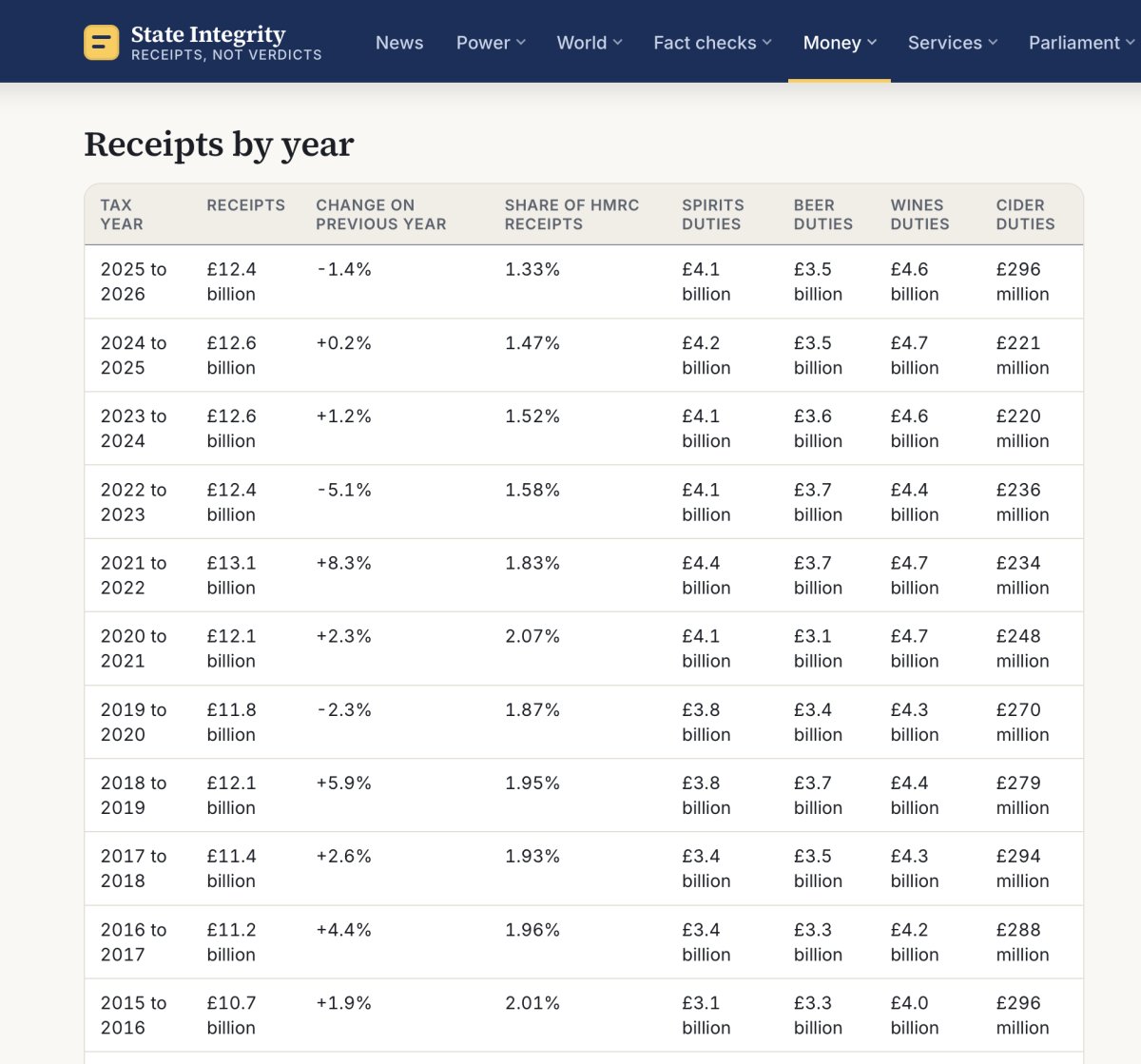
This is an interesting table from State Integrity. Wine has been a consistently reliable contributor to the Exchequer, with the highest level of duty raised compared to spirits and beer. Many of us in the trade have long argued that hitting wine too hard will see greatly reduced sales, a compromised product and less revenue for the Treasury.
Explaining the costs in the press
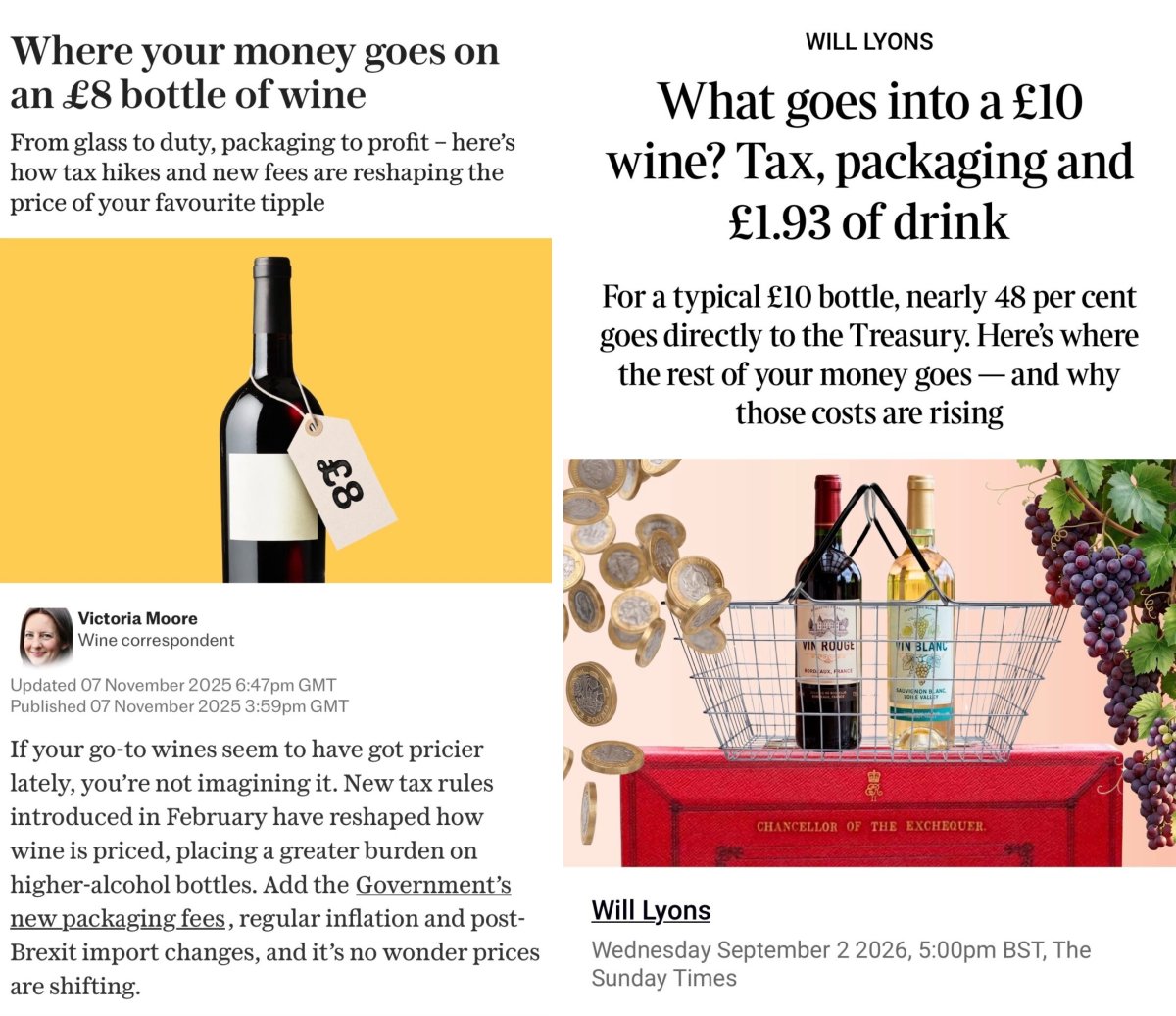
I occasionally speak to wine writers about duty and all the associated costs of producing and shipping wine to the UK, such as Victoria Moore of The Telegraph and Will Lyons of The Sunday Times.
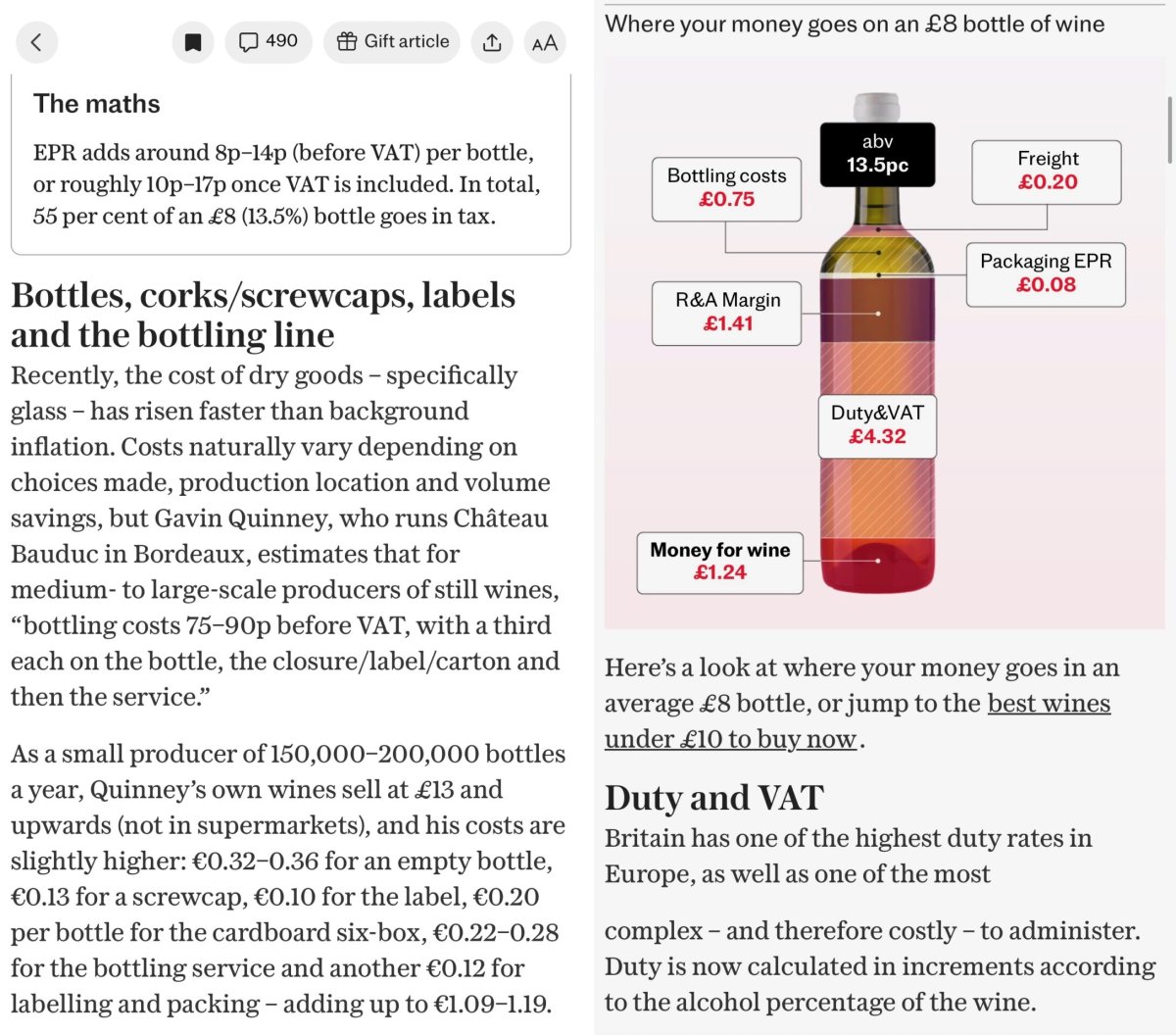
It can be a minefield trying to understand all the costs and putting it all into a bottle graphic. In this instance, I talked to Victoria about the bottling charges, among many things. This was in the Telegraph.
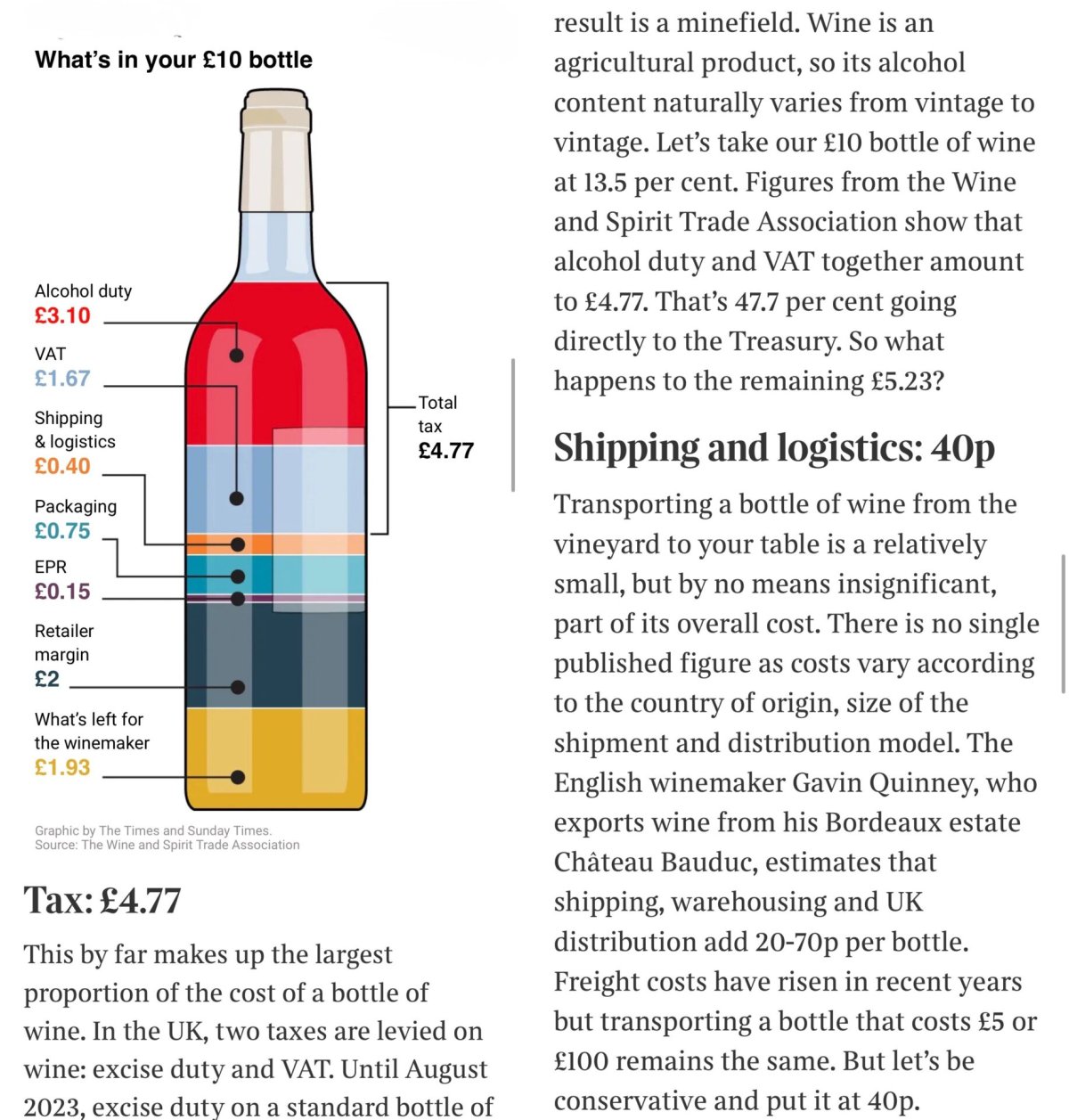
This was in September in The Sunday Times after speaking with Will. Once again, UK tax is the ‘by far the largest proportion of the bottle of wine’ (at this level).
The sweet spot?
Earlier this year Jane MacQuitty of The Times sent me an email with the subject line ‘With yet more daft taxes on wine, wonder where Gavin feels the sweet spot is now.”
I’m sure she won’t mind me repeating my reply:
‘Good to hear from you, and I hope you’re well. Your question is a good one – and I love the subject line.
In short, I’d say £12 is an achievable sweet spot, after any discounts. Admittedly, that’s a high price compared to what most people will spend, but these days I’d suggest ‘less (wine) is more’.
For the vast majority of wines sold in UK supermarkets, the average price paid in 2026 will be close to £7.20 a bottle. Duty is about £3 of that (for 13% abv as you know, with about 11p difference for every 0.5%).
As £1.20 is VAT, that leaves £3 on everything else, including the retailer’s margin. After shipping, bottling and logistics (and other costs) the amount spent on the wine itself will be pretty small. We know that, but most consumers don’t.
If you spend £12 (in some cases that might be a £16 bottle at 25% off of course), there’s £2 of VAT and £3 duty, leaving £7 for the wine, bottling, logistics and margins. Smart buyers can source a really decent bottle for that: if the fixed costs are broadly the same, the actual wine in the bottle would be worth five times that of the £7.20 bottle (eg £3 v 60p).
(I would add that my £12 is based on post-discount price. If it’s discounted fairly often to £9, I’d consider that to be a £9 wine. On the other hand, I’d think of a bottle from The Wine Society at £12 as a £12 wine.)
What do you think – and have I aimed too high?
Best wishes, Gavin’
‘Great reply, thank you Gavin. Currently gobsmacked by Aldi and Lidl’s wine of the week offers, the former sold a perfectly decent 2024 white rioja the other week for £3.99 down from £5.99 …’
Onwards and upwards.